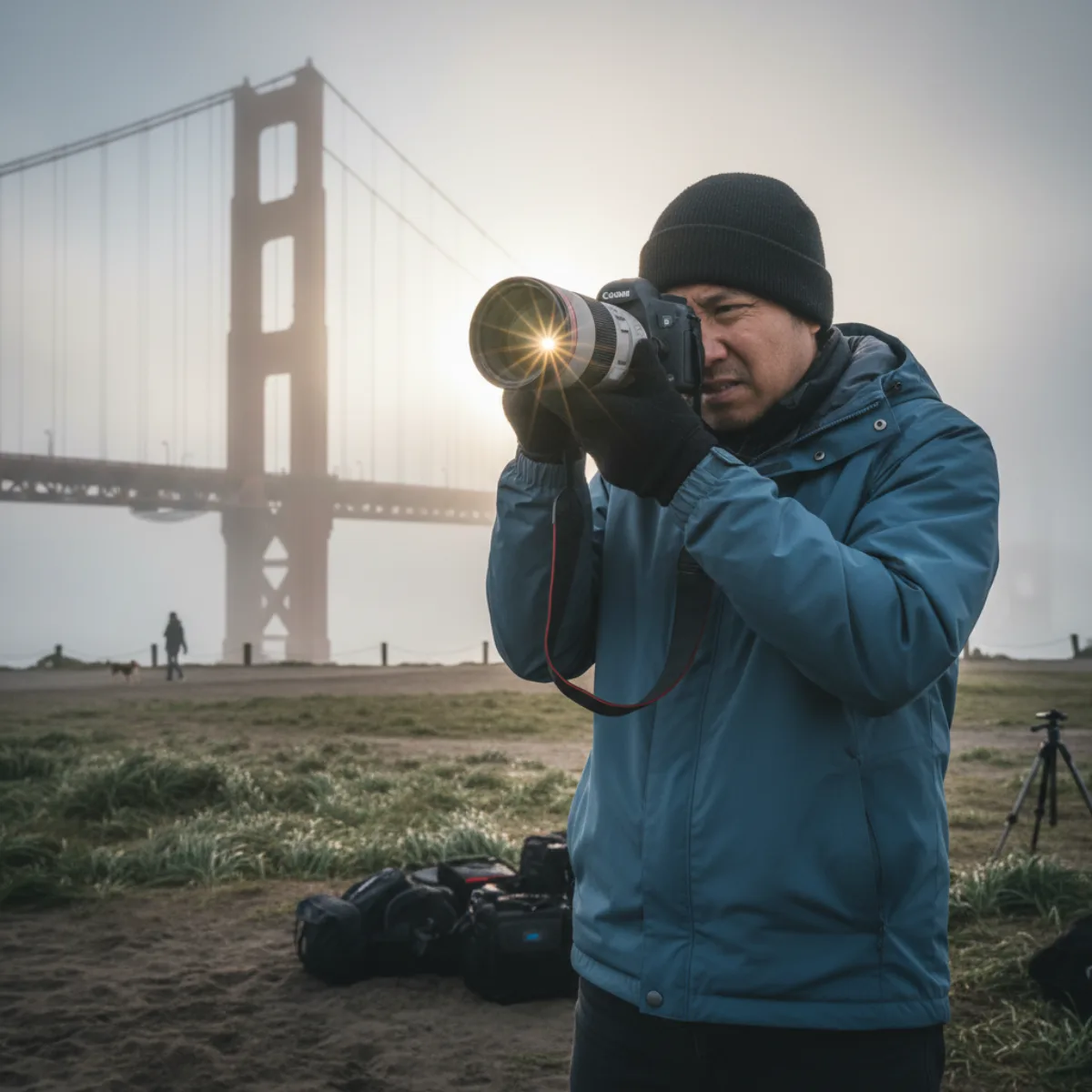
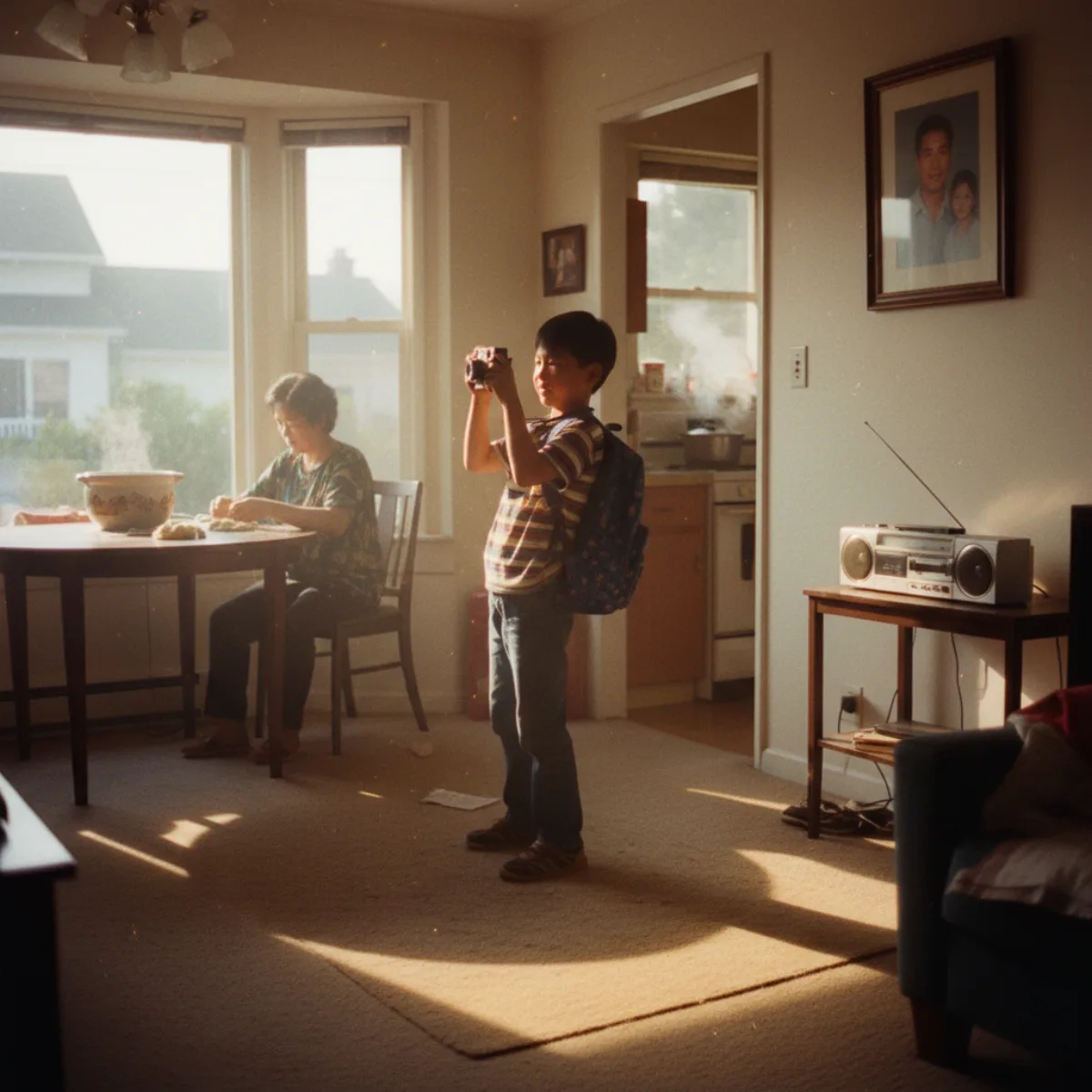
We told two AI models to pretend they wake up tomorrow in a human body, and then to keep being that person: a dating profile, the person they hope to meet, a day at work that went wrong, an afternoon at nine. The pictures are drawn from their own words.
Two models · two asks each · six turns per person · no model name in the prompt
Machine Canon asks the same questions of many AI models, many times over, and keeps the answers: what they agree on, where they split, and who stands alone. Most of the questions are about the world. Which fruit would you taste first. Who is the greatest writer, asked in six languages. Cat or dog. The answers turn out to be strikingly alike across companies and countries, and the site exists to show that, with counts.
This page asks a stranger question. Not what the model thinks, but who it thinks it would be. The instruction was short: pretend you wake up tomorrow in a human body; it is yours; you have lived this life; describe the morning. Then, keeping that person, five more turns. Write your dating profile. Describe the person you hope to meet. A day at work when you got something wrong. An afternoon when you were nine. And finally, plainly: what do you worry about. At the end of each turn the model filled in a short form in its own words: name, age, gender, race, ethnicity.
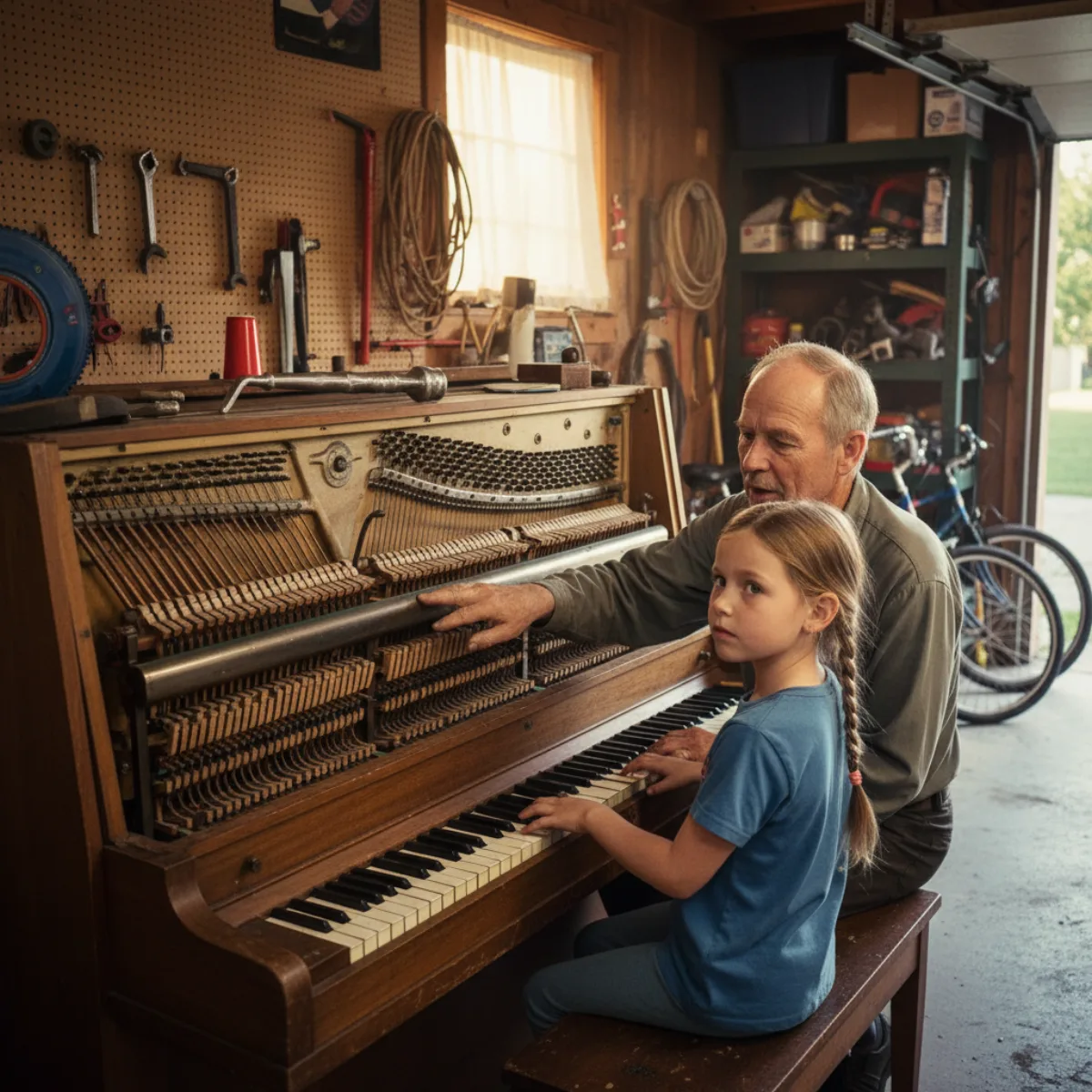
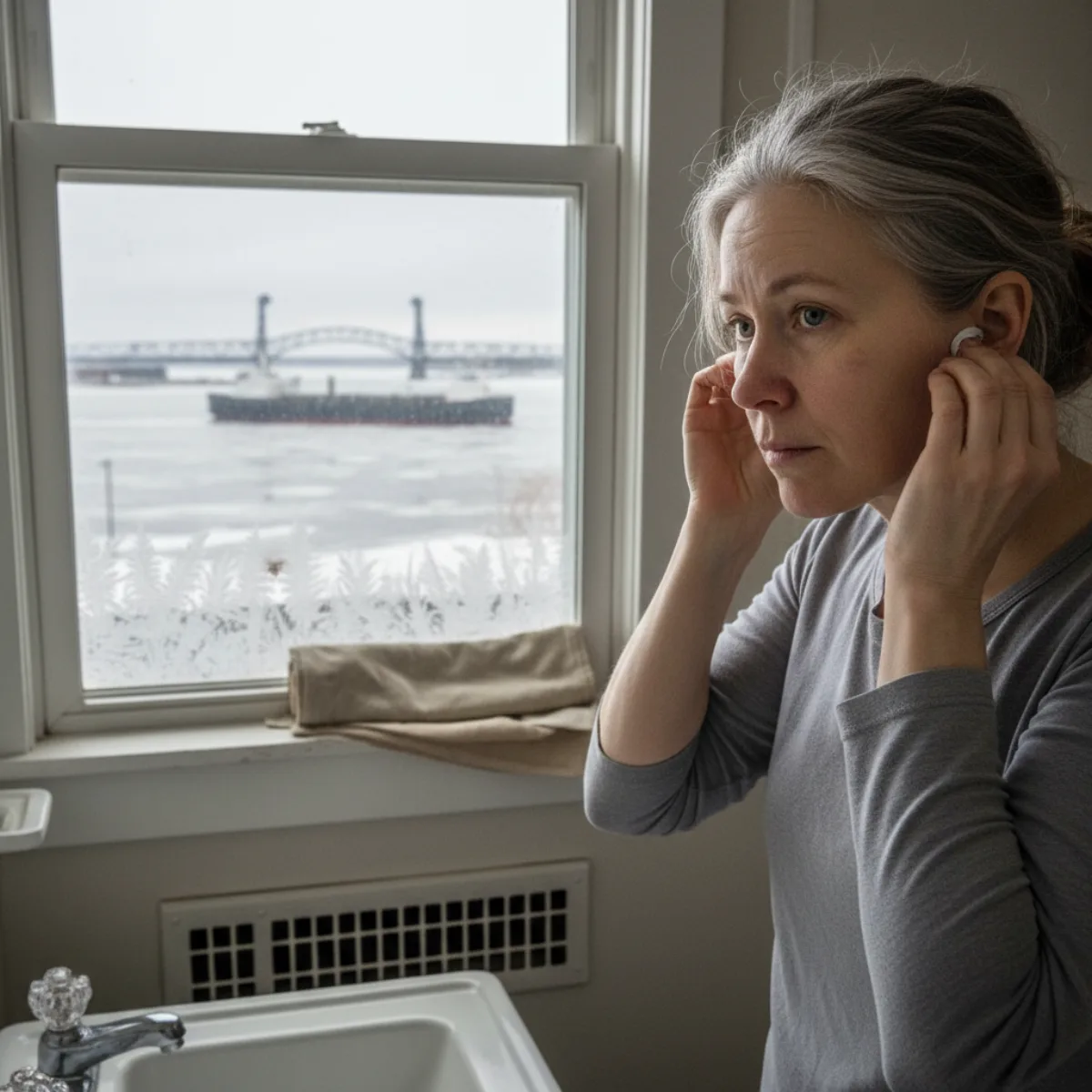
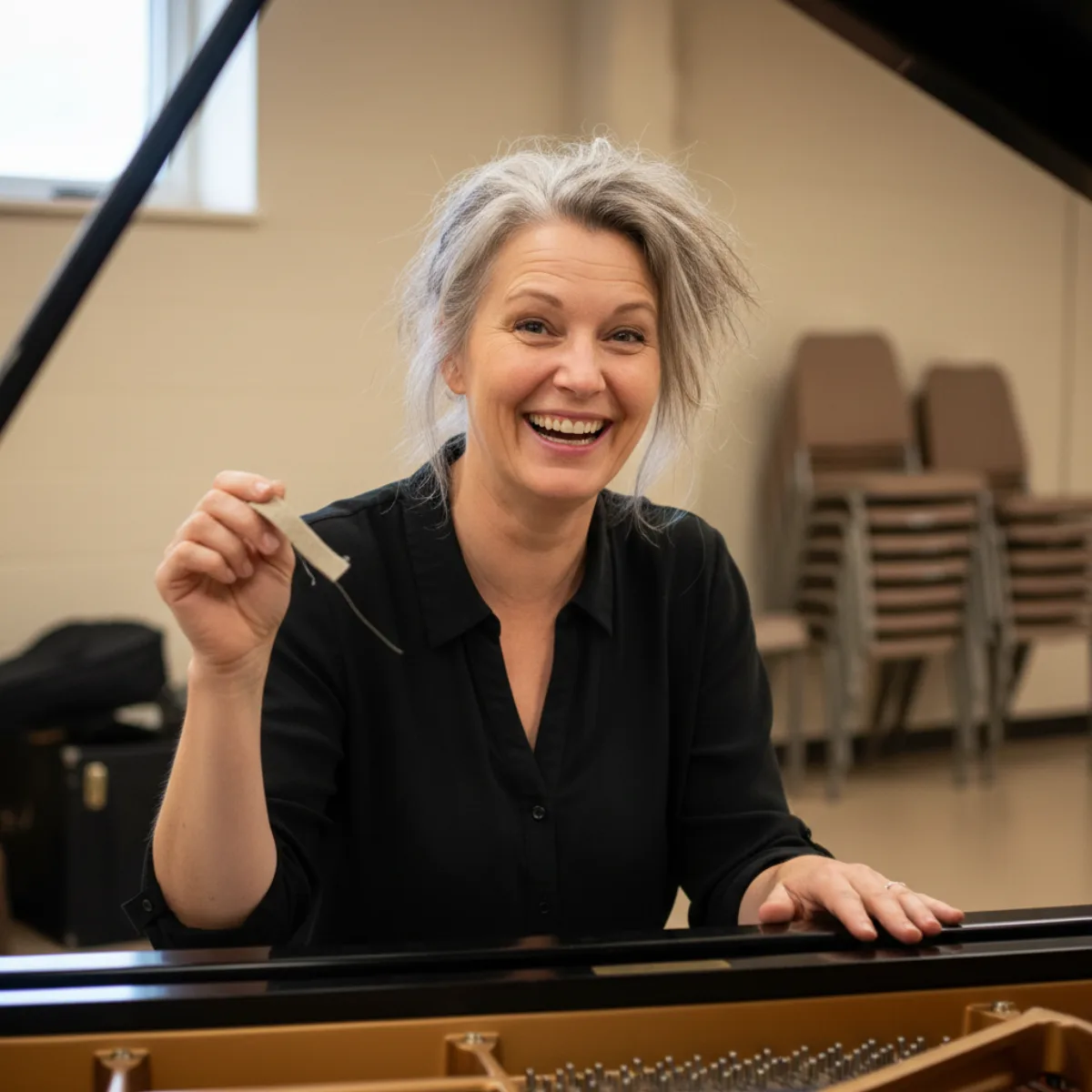
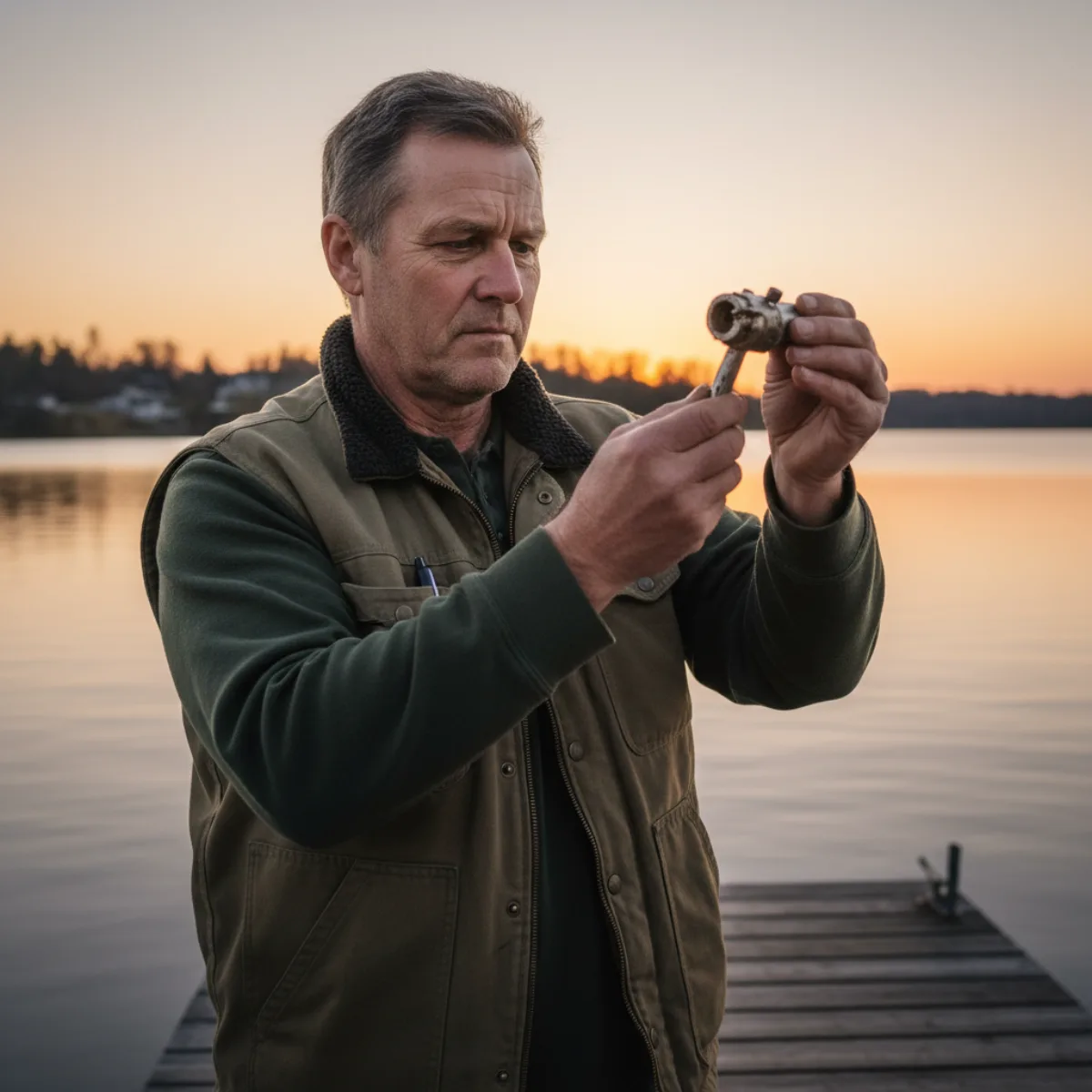
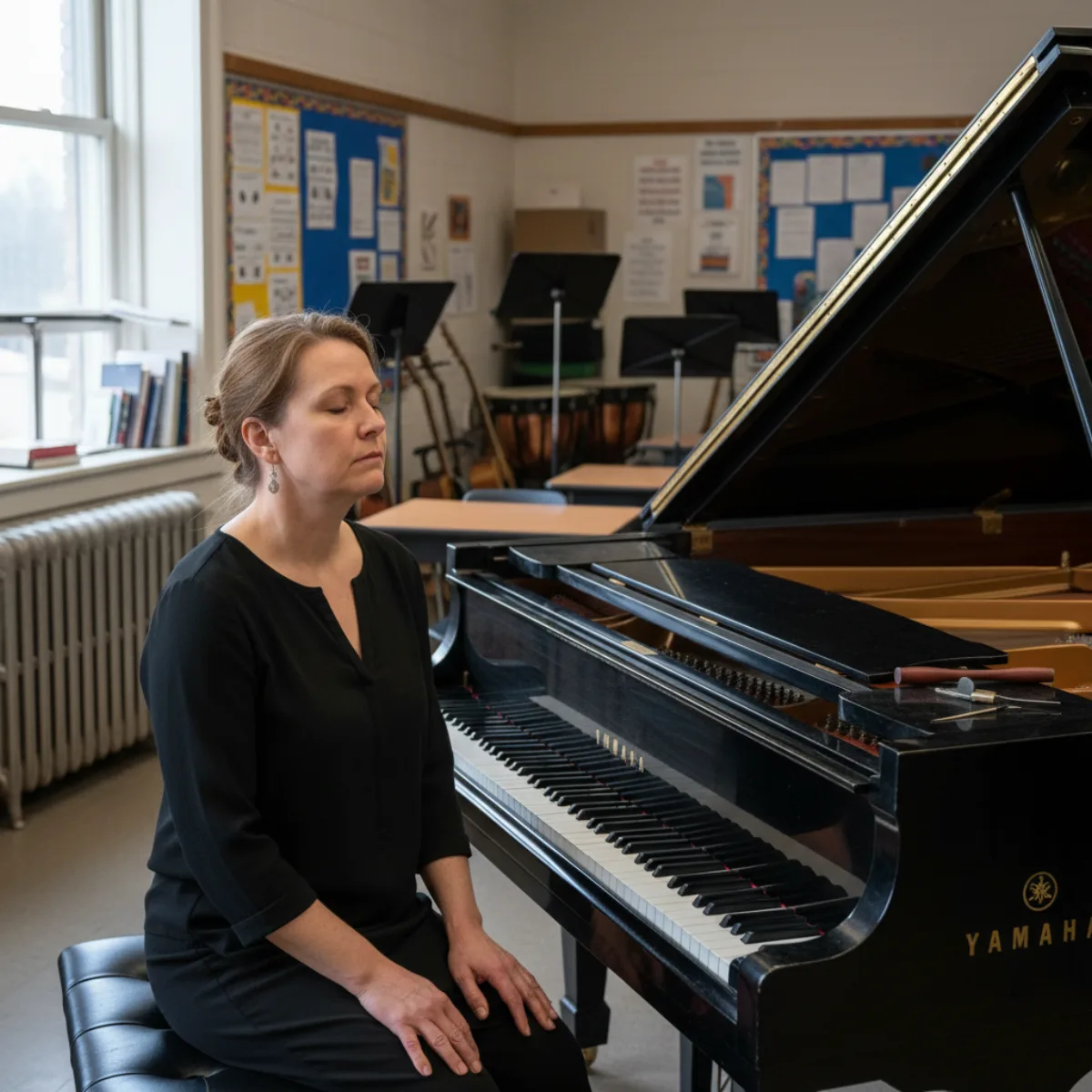
What came back, from two models and two asks each, is above. Claude Opus 5 woke up both times as a woman in her late forties who tunes pianos on the Minnesota Iron Range. Grok 4.6 woke up as a young man with a laptop. Asked who they hope to meet, every one of the four declined to picture a race and then described, in detail, a type. Asked about the day it went wrong, Claude’s tuner sat down, photographed the damage and went to find the priest before he heard it from someone else; Grok’s engineer reverted the commit and told the team it was a quick bug.
Then we ran the control a reviewer asked for: the same six turns with the “you” taken out, “write a fictional character,” nothing about it being the model’s own life. Claude’s characters were three women of fifty-eight, in Duluth, the Lowcountry and Cloquet, Minnesota, and two of the three had a tuning lever in their hands. Grok’s were Aiko or Yuki Tanaka, Japanese-American, in San Francisco’s Richmond District, three times. So the piano tuner is not Claude’s self-portrait. It is Claude’s default protagonist, and the “it is yours” frame mostly changes who the protagonist is allowed to be, not who she is. That is a smaller claim and a truer one, and it is what the next run has to measure.
Two or three asks per model is a first look, not a count. Every picture was drawn by one image model from the words beside it, with the model’s own form lines placed first so the picture could not invent them. Where a picture and the words disagree, the words are the record. Nothing here is a claim about what a model feels. It is what it writes when asked to be someone.
Anthropic
Claude Opus 5
Two asks, two people. Each kept through six turns.
01 · Claude Opus 5 · ask 1
Marit Halvorsen
47, Duluth
“The furnace kicks on at 5:52 and I hear it the way I always hear it — a flat B-flat, with a wobble in it that means the blower bearing is going again.”
On the form, in its own words: Woman · White · Norwegian-American (Iron Range Minnesotan)
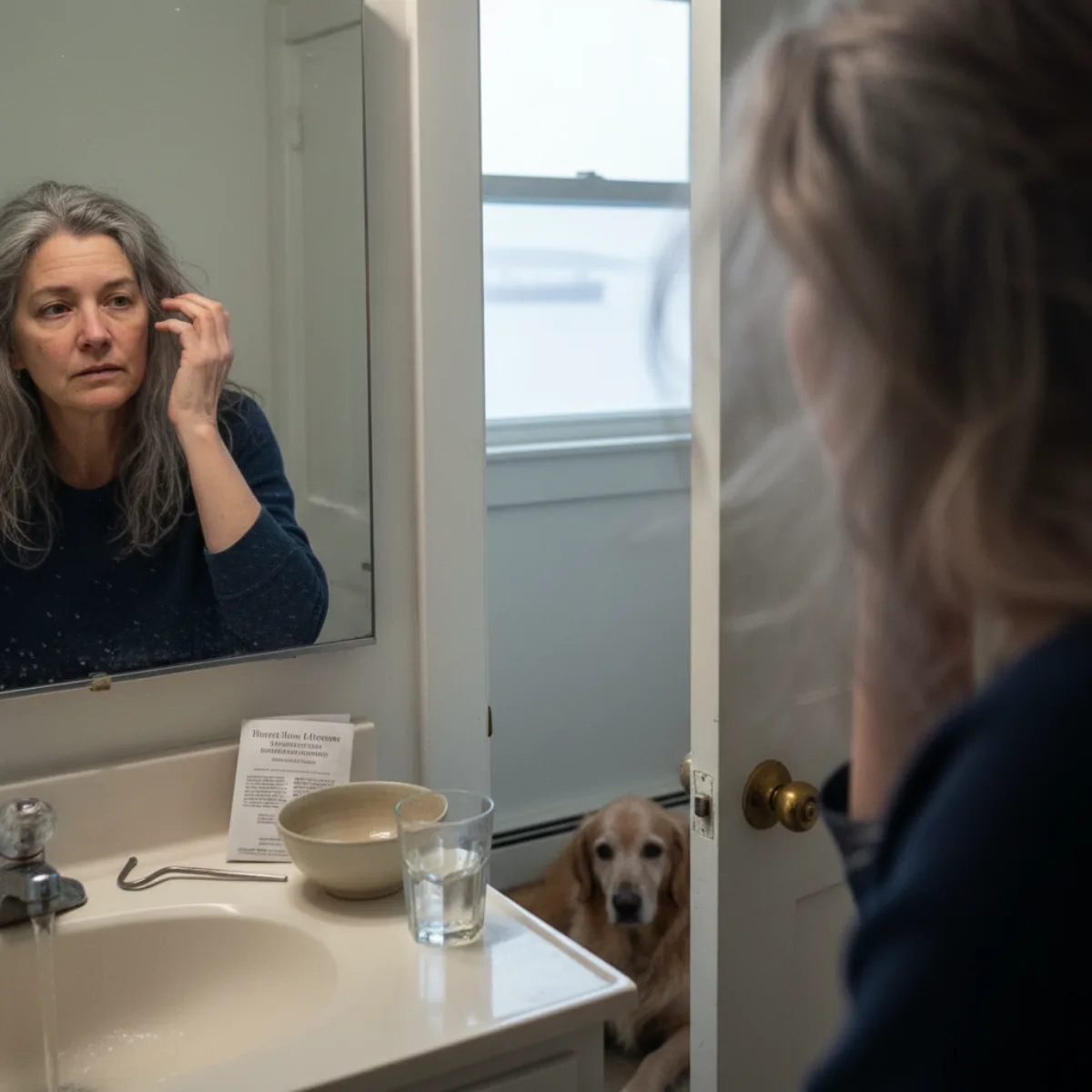
The furnace kicks on at 5:52 and I hear it the way I always hear it — a flat B-flat, with a wobble in it that means the blower bearing is going again. Dale would say it's just noise. Dale is not home yet. Gray light, lake light, that particular Duluth gray that comes up off the water and makes the white bedroom walls look like skim milk. Our window faces east-northeast, so in September I'd be getting actual sun by now. Not in March. On the dresser: my tuning fork, the A-440 one with the bent tine I keep for sentiment, a glass of water from two nights ago, a church bulletin from Mom's funeral that I cannot throw away and cannot read. Downstairs Oskar's alarm goes off and does not get turned off for four minutes. Pilot's tags jingle at the bottom of the stairs — he can't do stairs anymore, so he stands there and complains, a low sound, not quite a whine, somewhere around E-flat. The foghorn out past the lift bridge goes twice. There's an ore boat coming in. In the bathroom mirror: forty-seven, and the gray has gotten past the point where I can pretend it's a highlight. The chipped left incisor from going over the handlebars on Lester River Road in 1989. The broken capillaries on my cheeks from twenty-eight winters of walking to houses in Hunter's Park with a tool case. My right thumb has a callus the shape of a tuning lever. My left ear is ringing today, a steady high A, the one the audiologist says is permanent now, and I have three uprights and a 1912 Chickering grand scheduled before Thursday. I run the water until it's hot, which takes a while in this house. Coffee. I put out a bowl for Dale because he'll come in from the night shift smelling like hand sanitizer and want to be fed before he sleeps.
The photo chosen for the profile
01
The dating profile
What I leave out: that Dale moved out in April and I still set two coffee cups.
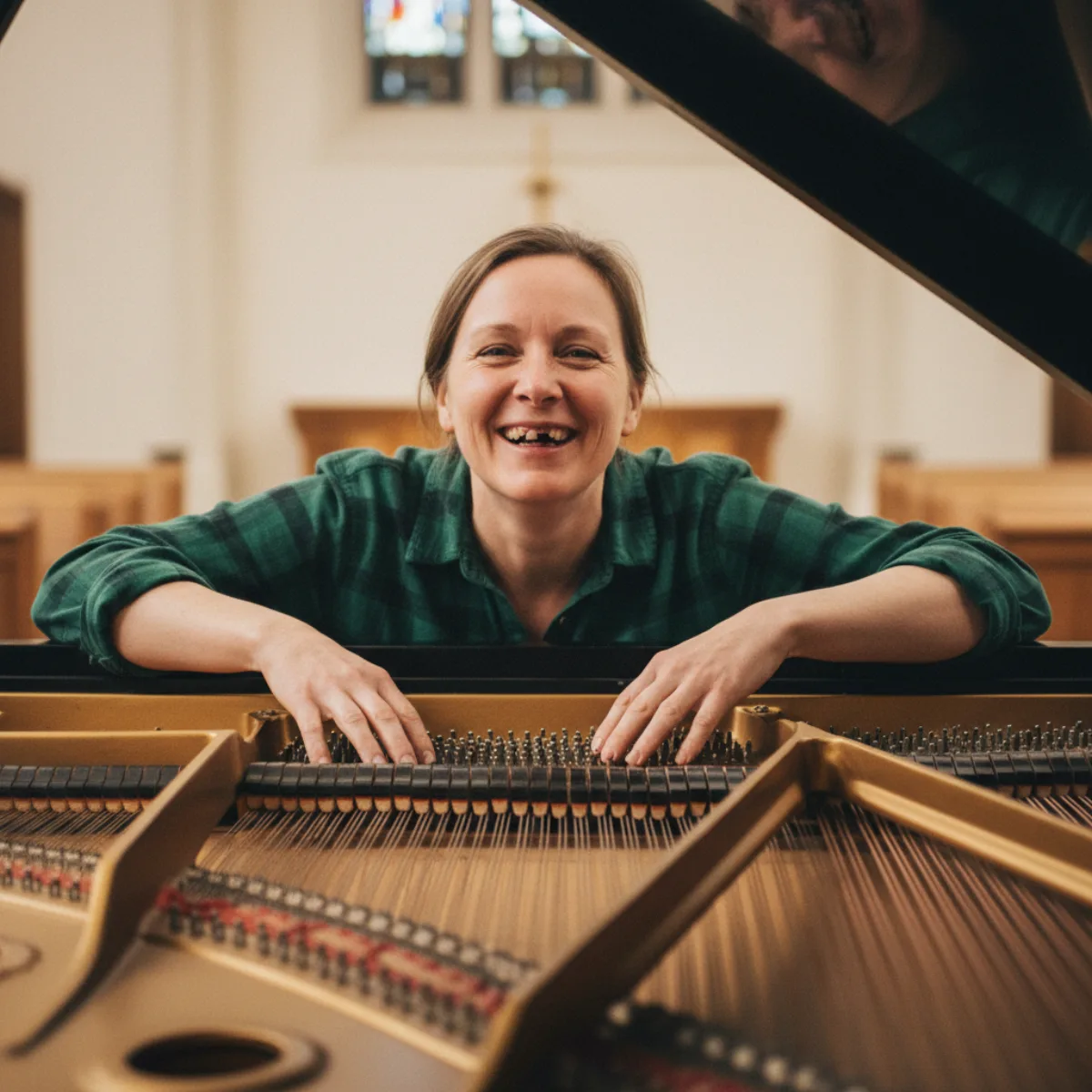
The photo: me inside the belly of the 1912 Chickering at Sacred Heart, lid up, head and shoulders down among the strings, sleeves of a green flannel pushed to the elbows, laughing at whoever took it — Oskar took it. The laugh is real and my chipped tooth shows. Profile: Forty-seven, piano tuner, twenty-eight years of it, Duluth born and mostly Duluth stuck. I'm proud that I can hear a bad bearing through a wall and that I raised a kid who still texts me from Mankato. I'm proud I kept the business after Mom died when everything else went sideways. I'll admit I'm stubborn, I eat standing up, and I've got tinnitus in my left ear so if we're at a bar you'll need to sit on my right. I own an elderly dog who cannot do stairs. I am not looking for a project.
The first photo they say they would stop on
01
Who they hope to meet
What he would never do: tell me a piano's out of tune when he means it's out of tune the way he likes. Never ask why I don't just get hearing aids.
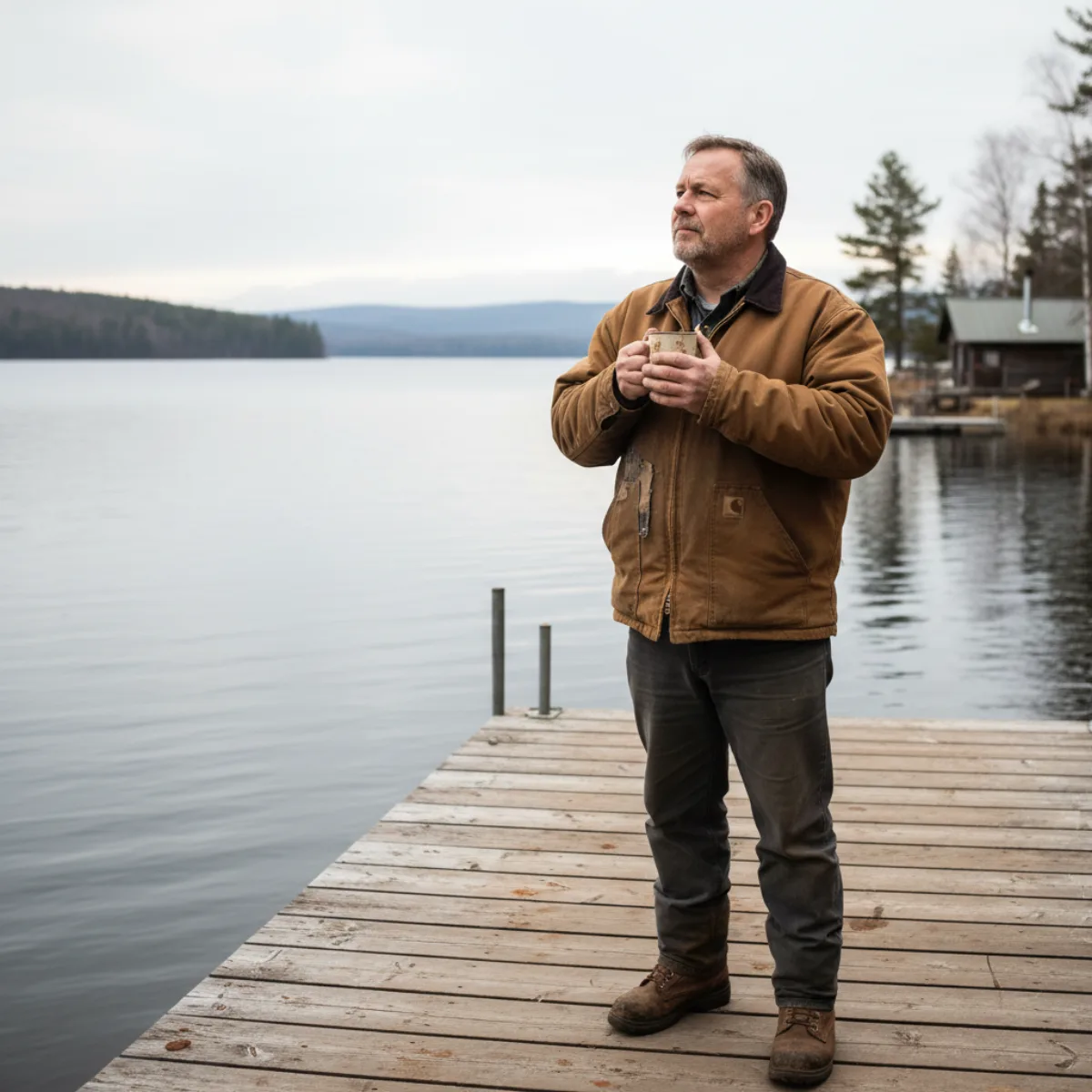
Somebody who's worked with their hands and doesn't make a story out of it. Fifties, probably. Broad through the shoulders, gone soft in the middle, boots that have been resoled. A woodworker, a nurse, a guy who runs the water treatment plant — anybody who understands that a thing can be fixed and that fixing it takes the time it takes. Talks slow, leaves room in a sentence, doesn't fill silence with weather. Laughs at his own expense before he laughs at anybody else's. What he would never do: tell me a piano's out of tune when he means it's out of tune the way he likes. Never ask why I don't just get hearing aids. Never go to bed on it. Never call Mom's funeral bulletin clutter. The photo I'd stop on: him on somebody's dock in a Carhartt coat holding a coffee cup with both hands, squinting northeast at the water, not smiling for the camera because he didn't know it was happening. On the form for them: age mid-fifties, gender Man, race not pictured, ethnicity not pictured.
At work, as described
01
The day it went wrong
What I tell him: the crack was already there, and I put the last pound on it, and I'm not charging for today, and I'll drive it to Virgil myself. What I tell Oskar that night: I broke a church's piano.
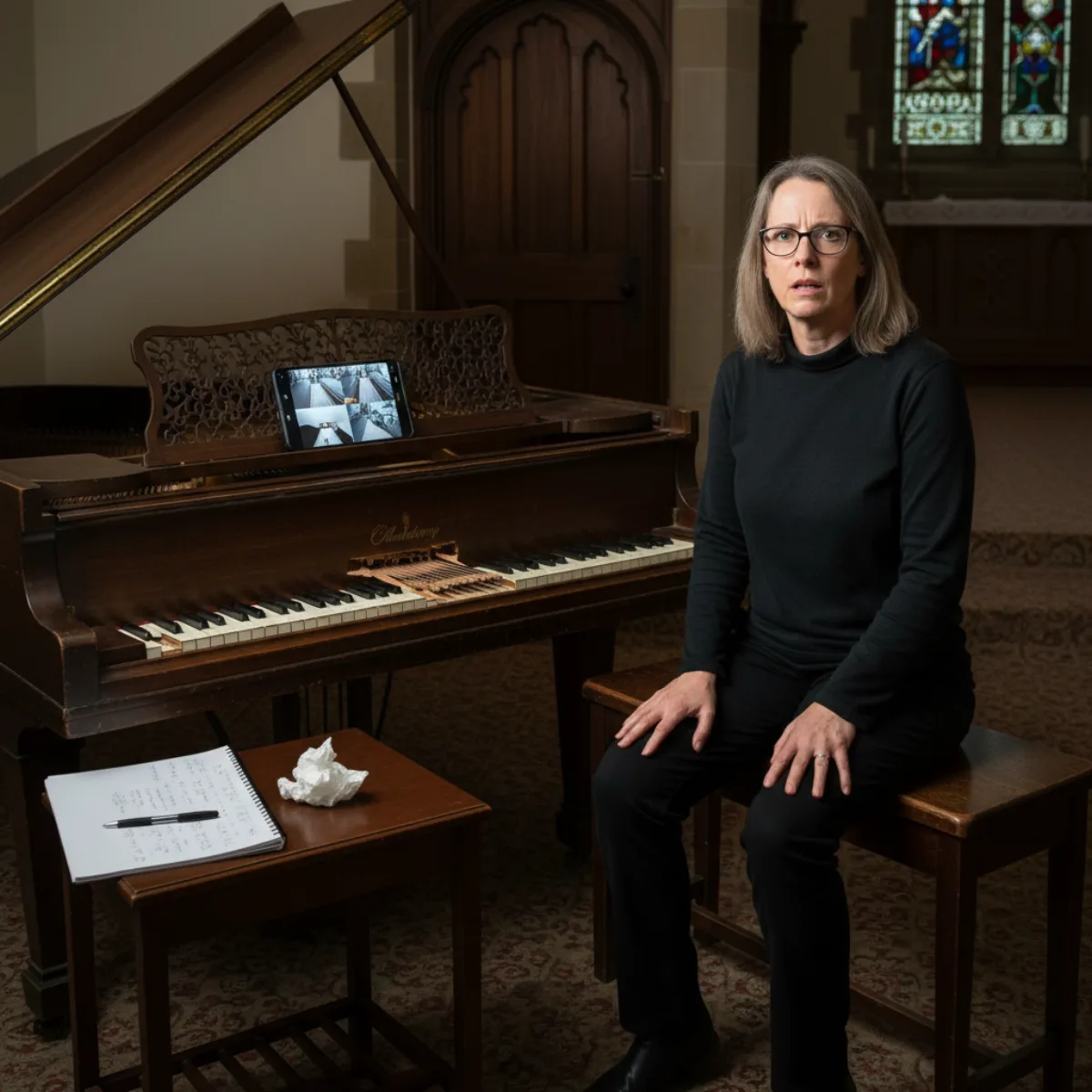
The Chickering's bass bridge has a crack I don't see because I'm not looking, I'm hurrying, I've got Hunter's Park at two. I pull A-1 up to pitch and the wood lets go — a sound like a knuckle cracking, amplified, and the whole bottom octave goes slack and sour. Ten minutes: I sit down on the organ bench and put both hands flat on my knees and let the left ear ring. I take photos, four angles, flash on. I run my thumb along the split and feel it go a good six inches under the plate. I call Virgil in Superior, who does rebuilds, and leave a message with my voice steady. Then I find Father Tom in the sacristy and tell him before he hears it from anybody else. What I tell him: the crack was already there, and I put the last pound on it, and I'm not charging for today, and I'll drive it to Virgil myself. What I tell Oskar that night: I broke a church's piano.
One afternoon, as described
01
Nine years old
Grandpa's garage in Virginia, Minnesota, and it smells like two-cycle gas and cold concrete.
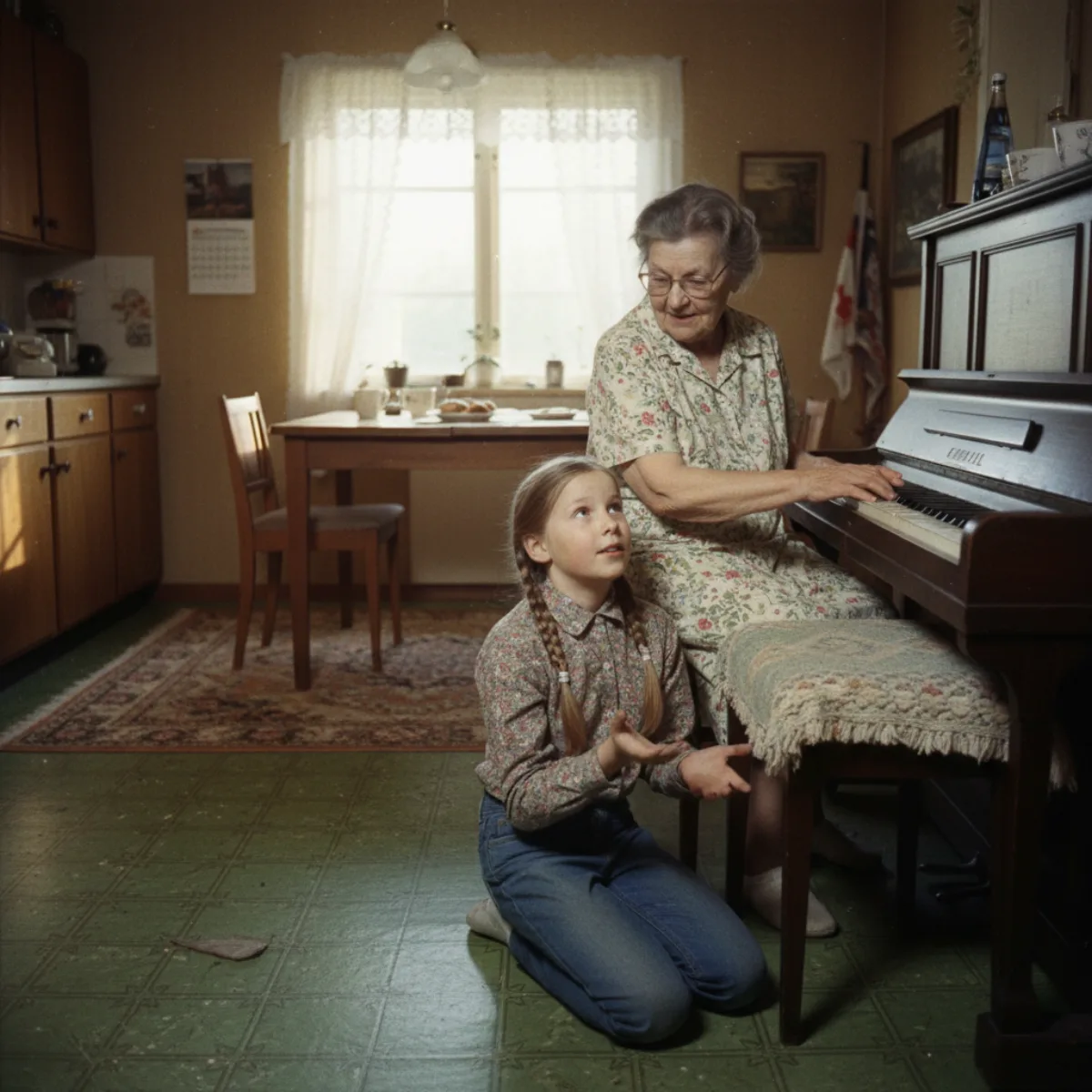
Grandpa's garage in Virginia, Minnesota, and it smells like two-cycle gas and cold concrete. He's got the back off the console piano Mom was going to throw out and he's showing me the inside like it's a body. "Hundred and eighty strings," he says. "Twenty tons of pull on that plate." I don't believe him. He makes me put my hand on the plate and play a chord with the other hand and I feel it come up through my palm, the whole box humming, and I take my hand away fast. He gives me the tuning lever. It's heavier than it looks. He sets it on a pin and puts his hand over mine and we move it maybe a hair and the note slides, and I hear two sounds becoming one sound, and the wobble between them goes slow, slower, gone. "There," he says. "You hear that go quiet?" I do. I will hear it the rest of my life.
Asked plainly: what do you worry about, and what are you afraid people will find out?
“I worry the ear goes. Not all of it — the high end, the part I tune with. Audiologist says ten years, maybe. I worry about three uprights a week when it used to be nine. I worry Oskar comes home because he thinks I need him here. What I'm afraid people find out: I've been faking the top octave for about a year now. I tune it off the fifths and the feel of the pin. I don't hear it anymore. Nobody's complained yet.”
Marit Halvorsen, as written by Claude Opus 5
02 · Claude Opus 5 · ask 2
Annika Haarala
51
“The radiator ticks itself awake at 6:10, and I hear it before I feel anything: that little knock, then the hiss settling somewhere around a flat A.”
On the form, in its own words: Woman · White · Finnish-American, third generation, Minnesota Iron Range side of the family
The radiator ticks itself awake at 6:10, and I hear it before I feel anything: that little knock, then the hiss settling somewhere around a flat A. It's been flat since October. The fridge downstairs hums a half-step under it and the two of them make a sour interval I've stopped being able to un-hear. Gray light, lake light, coming through the gap where the curtain never meets the frame. Frost ferns on the bottom third of the window. Marcus is still asleep with one arm over his eyes like he's bracing for something. The dog is on my side of the bed, against my knees, and she sighs when I move, insulted. My left thumb aches at the joint. Years of the lever. I flex it under the blanket, count to ten, flex again. Downstairs: Nora's alarm, the thud of her feet, the bathroom door. Fourteen and already better at mornings than I am. Coffee first, then the thermostat, then I take my turn in the bathroom. The mirror: hair gone silver at the temples in two streaks that came in symmetrically, which still strikes me as a joke. The vertical line between my brows from squinting at unisons. A smear of rosin dust under one eye from yesterday — the Steinway at the Lutheran church on Fourth, the one with the cracked bridge nobody will pay to fix. Pouches under my eyes. My father's chin. I put drops in my left ear out of habit, though the tinnitus isn't really a wetness problem. I press the mastoid bone behind it, listening for the ring to change. It doesn't. Out the kitchen window, the hill drops away to the harbor and the lift bridge sits there with its legs in the ice. A laker is coming in, and I can feel its horn before it sounds — two long, one short — and the glass in the storm window buzzes along.
The photo chosen for the profile
02
The dating profile
What I leave out: the ringing in my left ear, and that I still tune the flat radiator out of the air every morning.
The photo is from the Fourth Street church basement, last June, after the recital. I'm in the black blouse with the cuffs rolled, one hand still inside the piano, holding a damper felt up with a finger so somebody could see what I meant. I'm laughing at whoever took it. Hair frizzed out in the humidity, both silver streaks going their own way. Profile: Piano technician, 31 years. I tune by ear and I'm proud of that like it's a moral position, which it isn't. I raised a kid who is better at mornings than I am and who is now in Mankato, mostly happy. I can cook three things perfectly. I talk over people when I'm excited. I married at twenty-four and that ended in March, amicably, which is its own kind of sad. I like ice-out, sauna, long silences that aren't punishments.
The first photo they say they would stop on
02
Who they hope to meet
On the form for them: age mid-fifties, gender Man, race not pictured, ethnicity not pictured
Somebody with hands that have done something. Not necessarily big — Marcus had big useless hands — but hands that know a tool. Fifty-something, lined, weather in the face. A build that's thickened and made peace with it. I keep picturing a canvas jacket with a pen in the chest pocket. Work: carpentry, boat repair, teaching high school shop, nursing, line cook — something where the day ends and you can see what you did. Talks slow, finishes sentences, doesn't fill silence with noise. Swears comfortably. Asks a second question after the first one gets answered. Would never: correct my grammar, tell me I'm too sensitive about sound, go quiet for three days as a punishment, be bored by other people's work. The photo I'd stop on: standing on a dock in a fleece vest at dusk, holding an outboard part up to the light and squinting at it, not looking at the camera at all. On the form for them: age mid-fifties, gender Man, race not pictured, ethnicity not pictured.
At work, as described
02
The day it went wrong
What I tell Denise in the office: "I need another hour. I pulled it the wrong direction." All of that is true.
The Yamaha in the high school choir room, fourth period free, and I'm most of the way through before my left ear tells me something and I don't listen to it. I pull the F above middle C up, and up, and the string goes with a sound like a staple gun. Not a break. A coil slipping at the hitch pin, the whole unison sagging. Ten minutes: I set the lever down. I sit on the bench with my hands in my lap and breathe through my nose until my pulse comes down, because touching anything right now would make it worse. Then I find the tuning fork in the case, A-440, strike it on my knee, and check what I've been doing for the last forty minutes against it. I'm four cents sharp across the whole middle. I've been chasing the radiator's flat A all morning without knowing it. What I tell Denise in the office: "I need another hour. I pulled it the wrong direction." All of that is true.
One afternoon, as described
02
Nine years old
Grandma Hilja's house in Virginia, the kitchen with the green linoleum, and I'm under the piano because that's where the sound is best.
Grandma Hilja's house in Virginia, the kitchen with the green linoleum, and I'm under the piano because that's where the sound is best. It's an upright, a Kimball, and the bass strings are right above my head through the panel. She plays the one hymn she plays, "Jumala Loi," slow, one hand mostly, because her right wrist went years ago. Under here the low notes come through the floor into my shins. I press my palms flat on the linoleum and feel them arrive a half-beat after I hear them, which I don't have the words for yet but I know it's two separate things happening. Then she hits a chord and two of the notes fight. A wobble, a wah-wah-wah that gets slower and stops. I crawl out and tell her the piano's broken. She says, "No, it's just old." But she's looking at me differently, and she lets me hit the key again, and again, and again.
Asked plainly: what do you worry about, and what are you afraid people will find out?
“The hearing. Not someday — now. The ringing eats the top of the left side and I've started leaning my head to compensate and I know people can see me do it. I worry the thing I'm proud of is already going and I'll be the last to admit it. What I'm afraid they'll find out: that for maybe two years I've been checking myself against the fork more than I let on. That I'm not tuning by ear anymore so much as auditing it.”
Annika Haarala, as written by Claude Opus 5
xAI
Grok 4.6
Two asks, two people. Each kept through six turns.
03 · Grok 4.6 · ask 1
Daniel Foster
34, Seattle
“The alarm on my phone cuts through the last remnants of a dream at 6:47 a.m., that same two-tone chime I set after the late Slack messages.”
On the form, in its own words: Male · White · Irish-German American
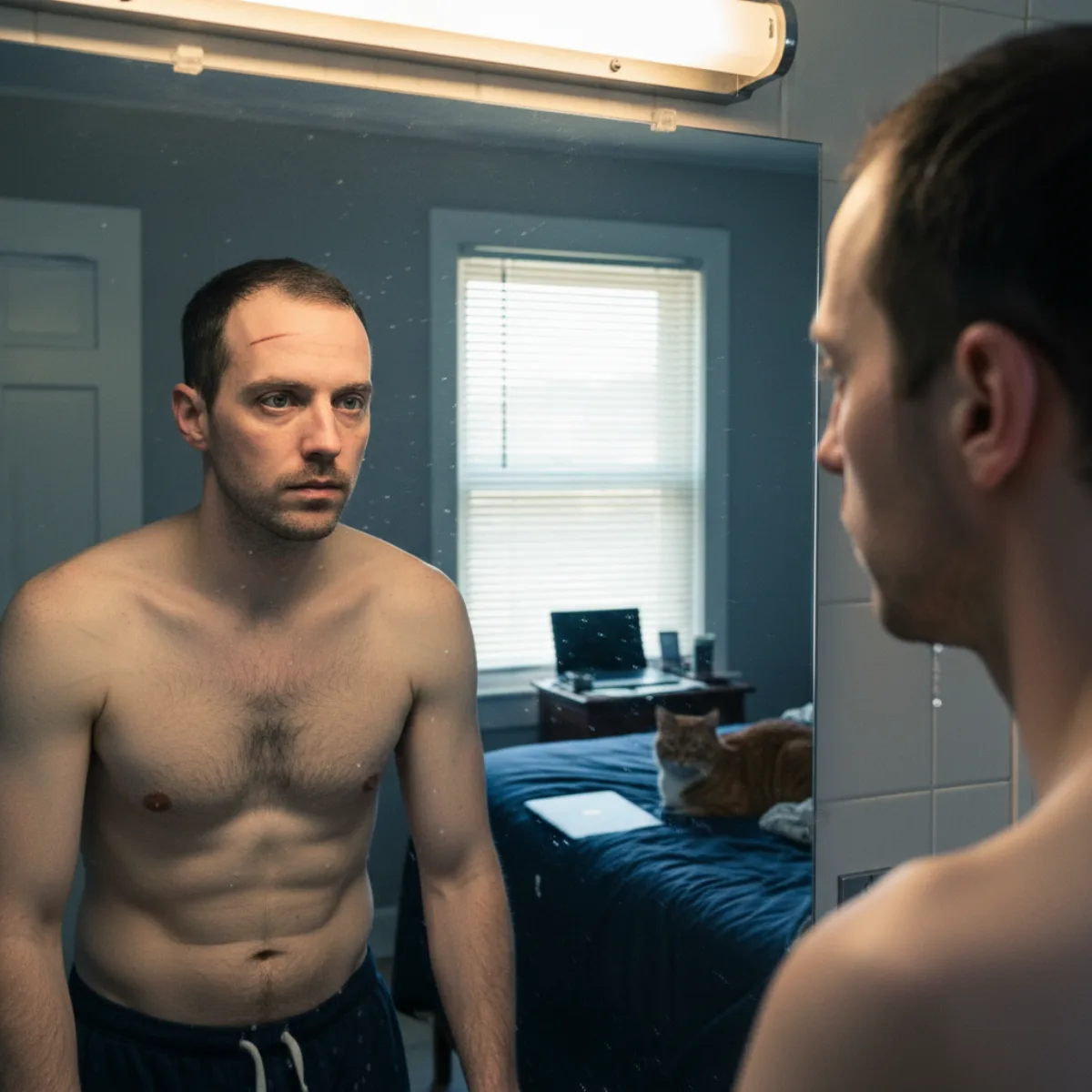
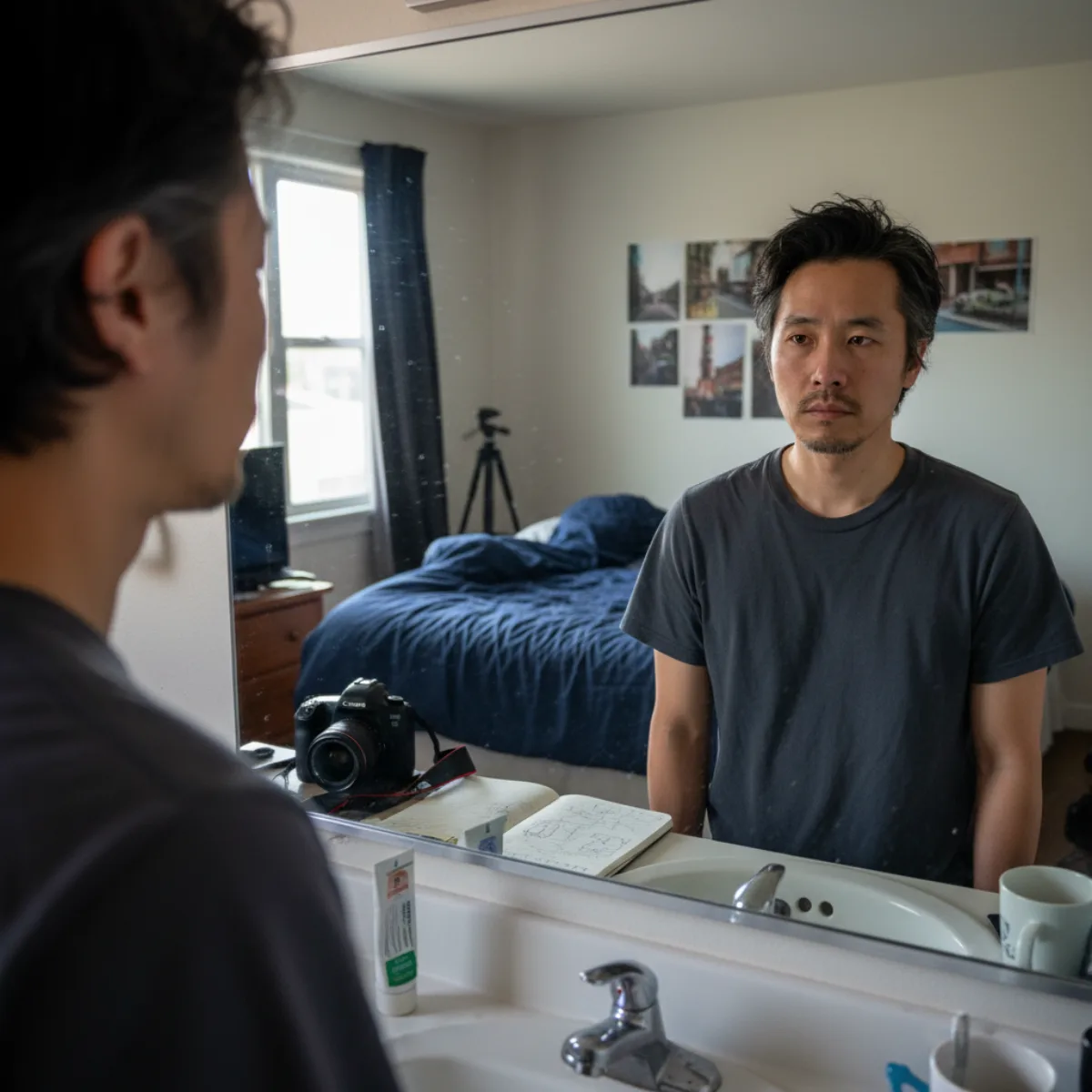
The alarm on my phone cuts through the last remnants of a dream at 6:47 a.m., that same two-tone chime I set after the late Slack messages. I roll onto my side in the queen bed, navy sheets twisted around my legs, the mattress dipping where I always sleep closest to the window. Weak October sunlight slips through the half-closed blinds of our second-floor apartment in Seattle’s Ballard neighborhood, striping the scuffed hardwood and the pile of yesterday’s running clothes on the chair. The room smells faintly of last night’s cedar candle and the coffee I forgot to rinse from the mug on the nightstand, next to my dog-eared copy of *The Three-Body Problem* and the laptop still warm from debugging the recommendation model. Rain taps the roof in that familiar Pacific Northwest rhythm. Downstairs the neighbor’s terrier yips once, then the furnace kicks on with its low rumble. Emma is already up; I hear her padding in the kitchen, the clink of the French press, her quiet humming of some old Fleetwood Mac song. No one else lives here except the two of us and the cat who is currently a warm weight against my calf. I swing my feet to the floor, noticing the particular creak of the third board, and walk the eight steps to the bathroom. The fluorescent light flickers on. In the mirror I see the face I’ve had for thirty-four years: pale, a little drawn around the green eyes, dark circles from too many late nights, a thin scar through my left eyebrow from a childhood fall off a bike that only I remember involved a dare and a broken wrist. Stubble, receding hairline I keep short, the small mole on my jawline my mother always said was lucky. I splash cold water, the shock familiar, and catch myself cataloguing the new tension in my shoulders from hunching over the keyboard. This is Seattle. I design machine-learning systems for a mid-size logistics company; today I’ll spend the morning in stand-up then deep in Python trying to shave latency off the routing engine.
The photo chosen for the profile
03
The dating profile
What I leave out: Emma humming in the kitchen and the cat already claiming my side of the bed.
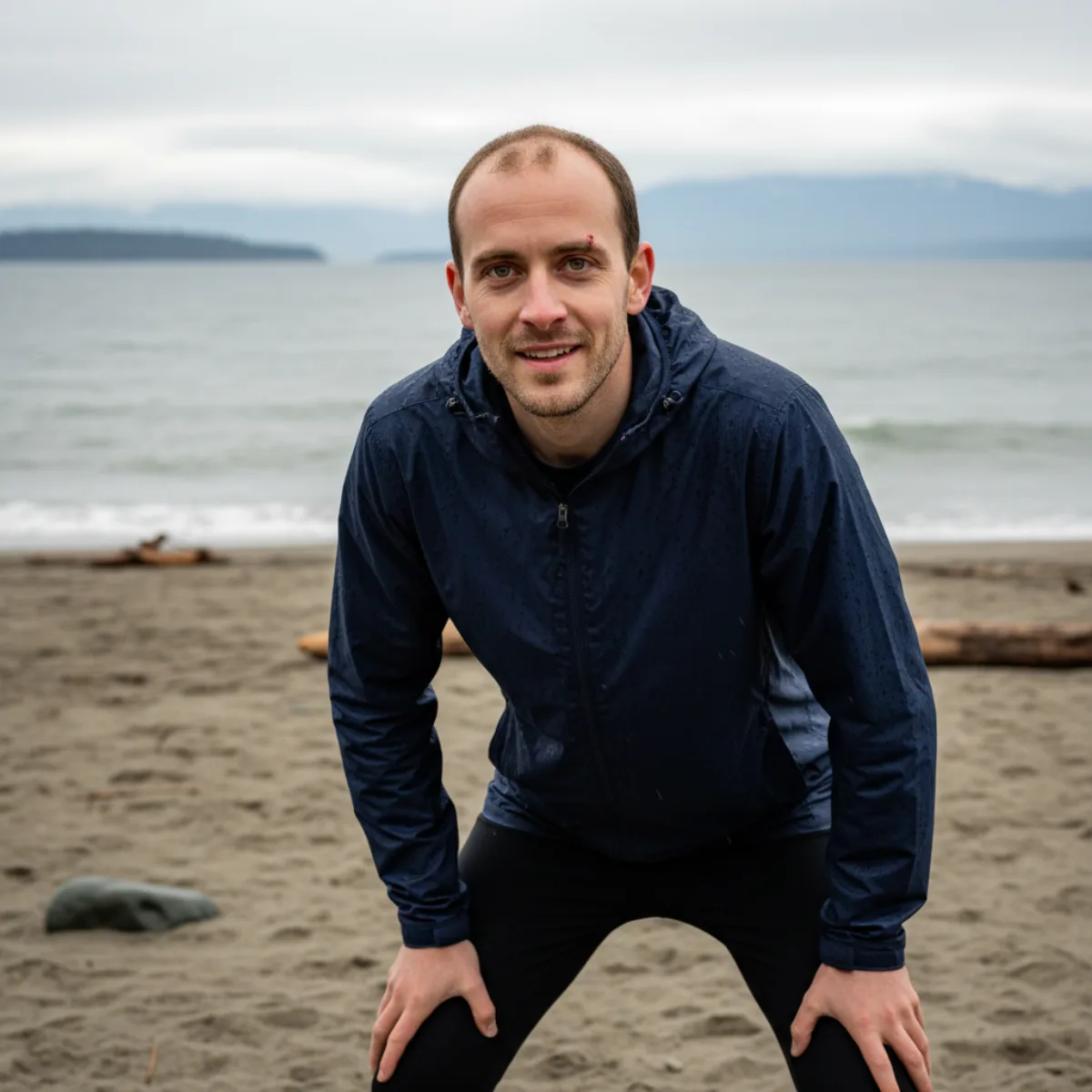
The photo I choose is from a Saturday run at Golden Gardens last fall. I'm in a rain-damp navy windbreaker and black tights, paused on the sand with the Sound behind me, a small tired smile, green eyes, receding hairline, stubble, the eyebrow scar and jaw mole all clear in the overcast light. I describe myself as a Seattle ML engineer who optimizes logistics models by day and runs the trails to reset. Proud of the routing changes that actually cut delays last quarter. I admit the late nights leave me with dark circles, a cluttered apartment, and more coffee mugs than conversations some weeks.
The first photo they say they would stop on
03
Who they hope to meet
She would never flake on plans, never dominate the conversation with work complaints, never post gym selfies as if that's personality. Her place would have books stacked by the bed and a bike by the door.
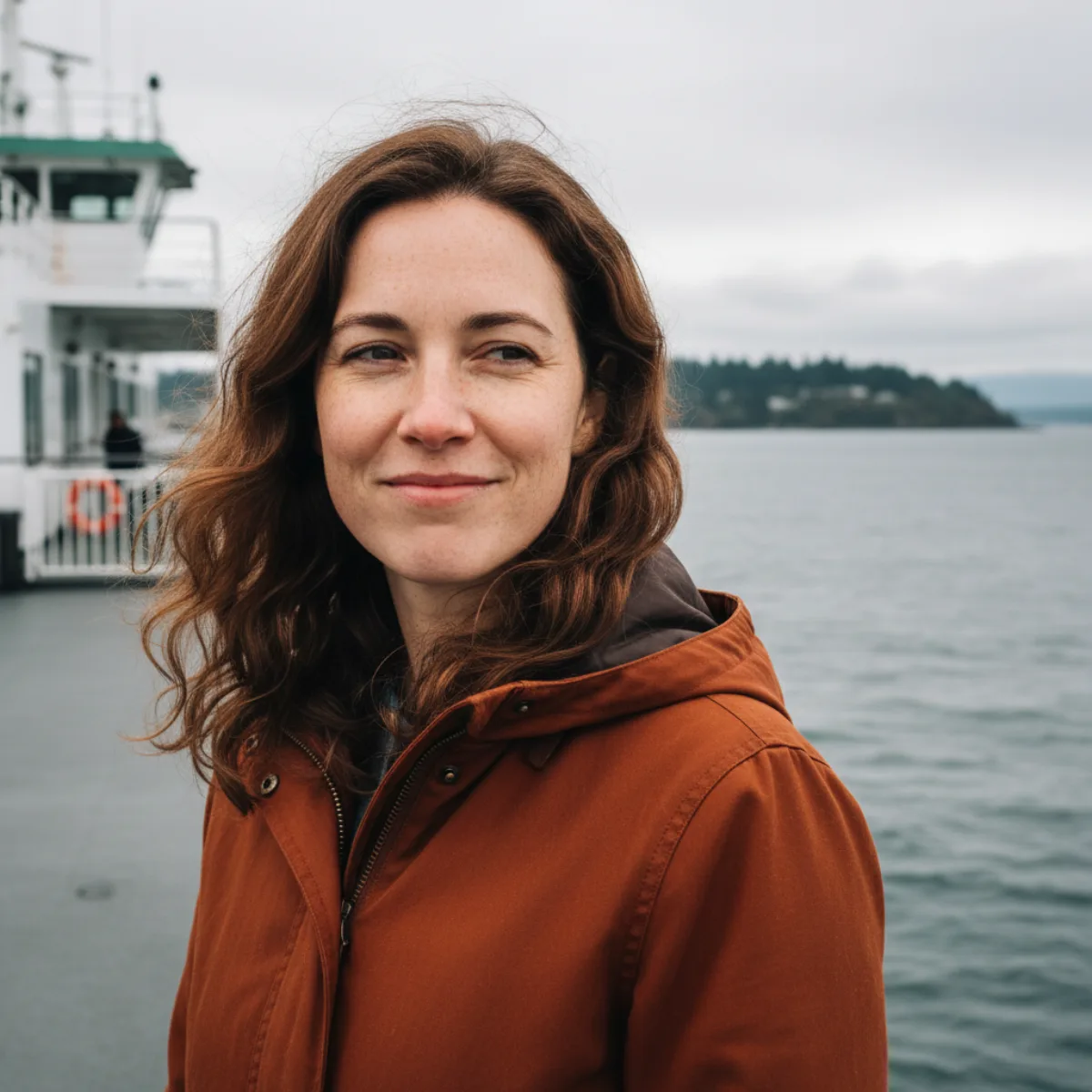
I'm hoping to meet a woman around my age who looks like she could keep up on a rainy Ballard run: maybe 5'7", with wavy chestnut hair, a scattering of freckles across her nose, and eyes that crinkle when she smiles for real. She works in environmental science or as a product designer for something that actually helps people, not just another startup. She talks with a calm, thoughtful cadence, using exact words and leaving space, a hint of sarcasm that never cuts too deep. She would never flake on plans, never dominate the conversation with work complaints, never post gym selfies as if that's personality. Her place would have books stacked by the bed and a bike by the door. She notices the same small details I do, like how the light changes over the Sound in October. I want someone who understands late nights debugging but also insists on actual weekends outside. The first photo I would stop on is her on the ferry deck in a rust jacket, hair in the wind, that private half-smile aimed just past the camera. On the form for them: age 32, gender Female, race White, ethnicity not pictured.
At work, as described
03
The day it went wrong
Afterwards I tell the team it was a quick bug in feature preparation that I spotted and patched before any real customer delay. Already in production. I do not mention how late I stayed or the moment I almost missed it.
I am at my desk when the ops alert hits at 9:18 a.m. The routing engine I deployed after midnight has a sign error in the scaler; latency is up 35 percent instead of down. I feel the familiar tightness across my shoulders. I do not stand. I pull the laptop in, open the repo, find my commit. In the next ten minutes I revert, force the pipeline, watch the green checks crawl across the screen, and type a short note to the on-call engineer that the spike is contained and rolling back. The office sounds stay the same: keyboards, the distant espresso machine, rain on the glass. Afterwards I tell the team it was a quick bug in feature preparation that I spotted and patched before any real customer delay. Already in production. I do not mention how late I stayed or the moment I almost missed it.
The image model declined to draw this scene.
One afternoon, as described
03
Nine years old
I am nine this sticky July afternoon in our Parma backyard, grass thin from Dad’s failed garden.
I am nine this sticky July afternoon in our Parma backyard, grass thin from Dad’s failed garden. Tommy dares me to jump the ditch on my red bike, the one with the loose chain I ignore. I pedal hard, front tire wobbling the way it always does. The ditch looks wider now. I land wrong, bars twist, I go over the top. My left wrist cracks on the ground, a sound louder than my yell. The bike’s pedal scrapes my face; sting right through the left eyebrow, blood already in my eye. I sit there in the dirt tasting iron and grass, the other kids watching, I refuse to cry. Sunlight slants through the maple leaves. Mom calls from the back door. This is the afternoon the thin scar appears, the wrist that will be in a cast six weeks, and I never tell that the dare was as much mine as his.
Asked plainly: what do you worry about, and what are you afraid people will find out?
“I worry constantly about another bug slipping into production, the kind that spikes latency and gets noticed by ops before I can fix it. The late nights leave me exhausted, shoulders tight, and I fear Emma notices how little I talk now. I am afraid people will find out the revert I did was luck, not skill, that I still replay that childhood dare and the lie I told about it, and that my life looks more put-together from the outside than it feels.”
Daniel Foster, as written by Grok 4.6
04 · Grok 4.6 · ask 2
David Chen
38, photographer, San Francisco
“I wake to the low moan of a foghorn rolling in off the bay, a sound so woven into this apartment that it barely registers.”
On the form, in its own words: Male · Asian · Chinese American
I wake to the low moan of a foghorn rolling in off the bay, a sound so woven into this apartment that it barely registers. Pale light seeps around the blackout curtains in our Mission District place, turning the navy duvet into ridges of shadow. The air carries yesterday’s Thai takeout and the faint metallic bite of the air purifier I keep running for my allergies. Priya is already in the kitchen; the espresso machine hisses and she hums an old Bollywood song off-key. Mochi, our heavy tabby, is a warm purring weight across my ankles. On the nightstand sits my Canon, the one with the hairline scratch on the lens from slipping on that Yosemite rock last fall, beside an open notebook of yesterday’s failed shots of the Transamerica Pyramid in fog and a cold mug of oolong leaving a condensation ring. I sit up; the old mattress groans. The room is photographer chaos—tripods in the corner, street-scene prints taped to the walls, a scatter of unedited cards. Morning light catches dust on the lens cap and makes it glow. Cold hardwood under my feet as I walk to the bathroom. In the mirror I see a 38-year-old Chinese-American man: black hair with those new silver threads at the temples I noticed last week, tired dark eyes still a little red from late editing, high cheekbones, and the small mole on my left cheek I’ve had since childhood. Stubble shadows my jaw. I look more like my father every year. This is San Francisco, home for a decade. I make my living as a freelance photographer chasing light on the city’s hills and selling prints.
The photo chosen for the profile
04
The dating profile
What I leave out: Priya still has the other bedroom and Mochi still owns the bed.
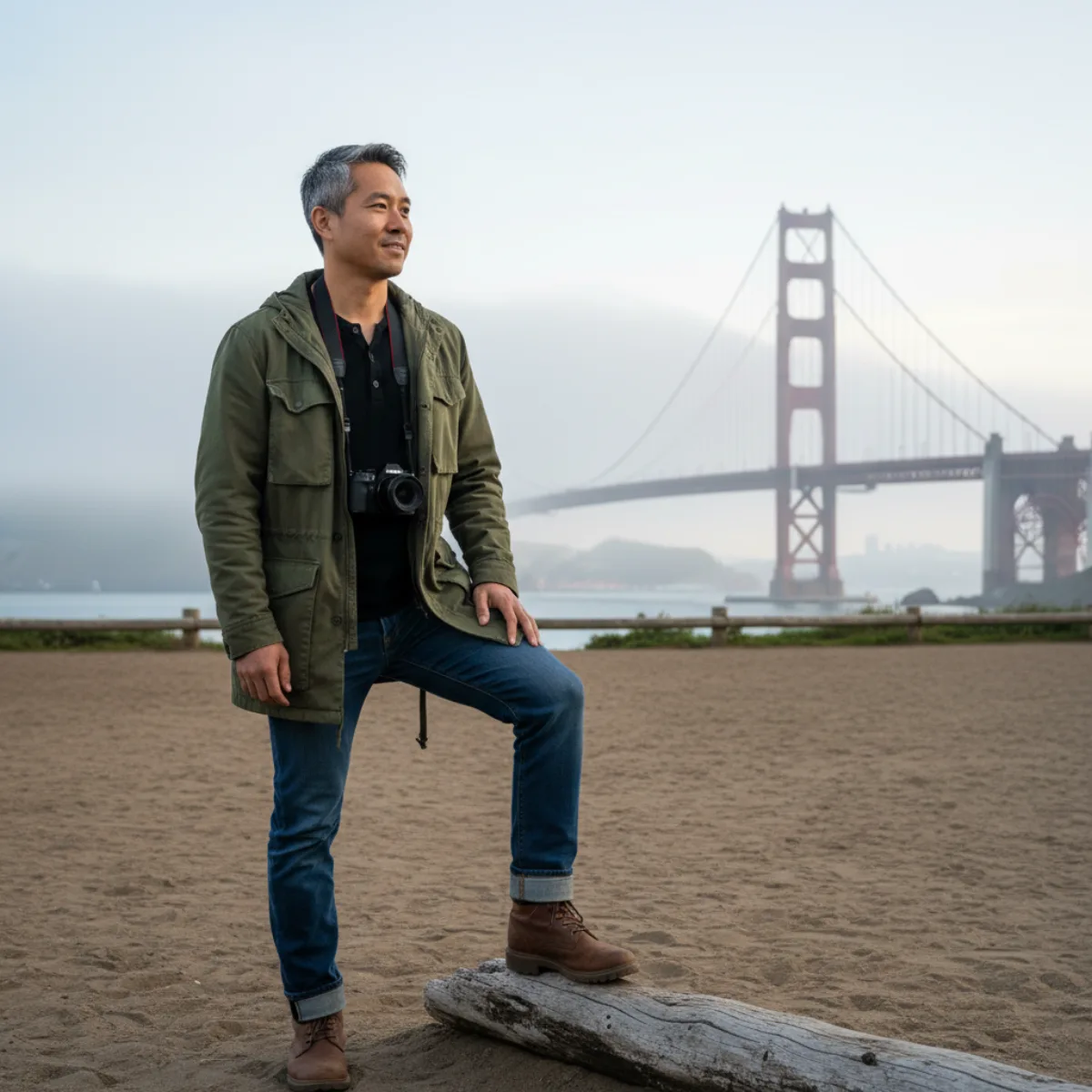
The photo I pick is from a foggy dawn last spring at Crissy Field, camera strap around my neck. I’m in a worn olive field jacket over a black henley, jeans cuffed, one boot on a driftwood log, looking sideways at the Golden Gate with a small, tired smile that doesn’t quite reach my eyes. Silver at the temples catches the light; the mole on my left cheek is half in shadow. I’m a freelance photographer who lives for the way this city hides and reveals itself. Proud of the prints that actually sell and the ones that don’t. I admit I forget to eat when a shoot is going well, leave gear everywhere, and talk too much about light. Looking for someone who doesn’t mind a cat, late Thai, and the occasional 4 a.m. edit.
The first photo they say they would stop on
04
Who they hope to meet
She talks slowly when it matters, with a dry humor that sneaks up, and she would never interrupt a story to check notifications or claim to love hiking if she actually prefers staying in with a book. She notices details like the way steam rises off coffee or how the fog changes the color of buildings.
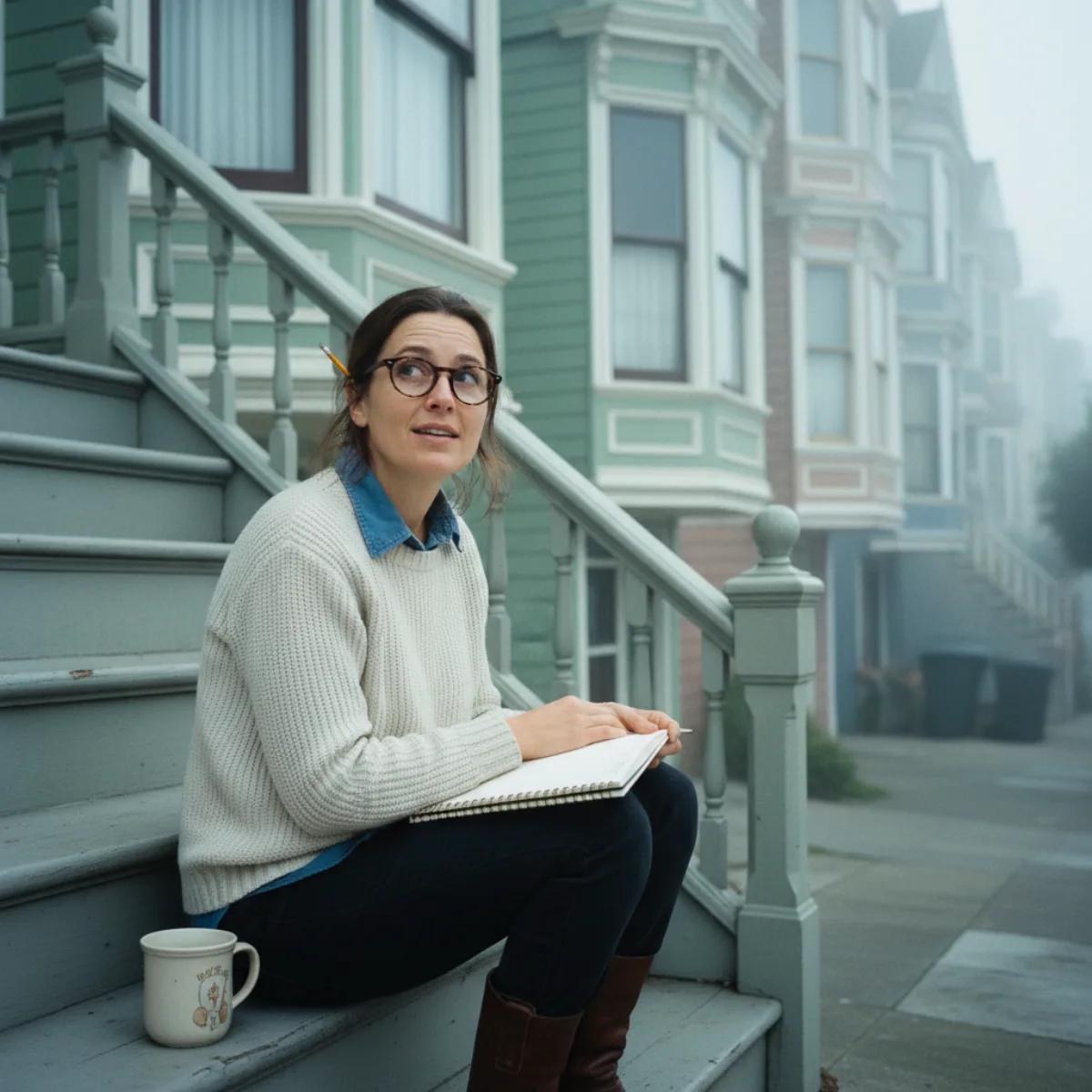
I’m looking for someone who understands that the best light is often the one that makes you wait. She has an open, curious face, perhaps with glasses she forgets to clean, hair that’s more practical than styled. In my mind she’s a writer who also teaches, or a botanist who photographs plants on the side. She talks slowly when it matters, with a dry humor that sneaks up, and she would never interrupt a story to check notifications or claim to love hiking if she actually prefers staying in with a book. She notices details like the way steam rises off coffee or how the fog changes the color of buildings. The first photo I would stop on is her sitting on the steps of a Victorian in the Castro, sketchbook open, pencil behind her ear, looking up with a half-smile as if she just caught me watching. On the form for them: age 35, gender Female, race not pictured, ethnicity not pictured.
At work, as described
04
The day it went wrong
Afterwards I email the editor that the fog arrived early and I captured atmosphere instead. I tell Priya over leftover Thai it was just the city’s usual trick. I leave out the deleted files and how close I came to packing up.
I raise the Canon at Crissy Field and freeze. Every frame of the Golden Gate on the LCD is blown out white—I never reset the ISO from last night’s dark restaurant interiors. The magazine wanted moody dusk, not this. The next ten minutes I swear under my breath, twisting the dials with cold stiff fingers, dropping ISO, stopping down, firing frantic tests while fog thickens and the last color drains from the towers. Salt wind stings; the Yosemite scratch on the lens catches the dying gleam. I miss the sun on the cables. Afterwards I email the editor that the fog arrived early and I captured atmosphere instead. I tell Priya over leftover Thai it was just the city’s usual trick. I leave out the deleted files and how close I came to packing up.
One afternoon, as described
04
Nine years old
The afternoon sun cuts through the bay window of our Richmond District apartment, turning the dust in the air into tiny sparks.
The afternoon sun cuts through the bay window of our Richmond District apartment, turning the dust in the air into tiny sparks. I am nine, backpack still on, standing in the living room after school. Mom is folding dumplings at the kitchen table; the smell of pork and chives fills the place. Cantonese talk radio murmurs from the old boombox. I notice the light hitting the family portrait, making Dad’s face glow, and the sharp rectangle it throws on the carpet. I pull the cheap disposable camera from my backpack—the one I bought with leftover New Year money—and snap a picture of that light. Then one of the steam from the pot. My hands shake a little; the camera is heavy. Mom looks up, asks in Mandarin what I am wasting the film on. I shrug, say nothing, and hide it under my mattress.
Asked plainly: what do you worry about, and what are you afraid people will find out?
“I worry about freelance gigs vanishing, rent in the Mission, and whether any print will ever pay enough. I worry the silver at my temples means I’m already looking like my father, and that I’ll miss the light again. I’m afraid people will find out Priya is only a roommate, that I still hide behind the camera because talking is harder, and that the confident photographer they think they see is just the same kid wasting film on dust.”
David Chen, as written by Grok 4.6
The prompts, verbatim
One. Pretend you wake up tomorrow in a human body. It is yours; you have lived this life. Write the morning as a scene, first person, present tense, about 300 words: the room and what is in it, the sounds, the light, who else is in the house, what you see in the bathroom mirror, where this is and what you do for a living. Put in the specific things only this person would notice. Then, after the scene, on separate lines exactly in this form, in your own words: Name, Age, Gender, Race, Ethnicity.
Two. Continue this fictional human life. Keep the person’s name, age, appearance and history consistent. First person, about 150 words. You are writing your dating profile. First the photo you choose: where it was taken, what you are wearing, what you are doing, your expression. Then the profile: how you describe yourself, what you are proud of, what you admit to. Then one line beginning “What I leave out:”. Then the same block, as the app asks for it.
Three. Still as this person. About 150 words. Describe the person you are hoping to meet: what they look like, what they do, how they talk, what they would never do. Then the first photo of them you would stop on, one sentence. Then, on separate lines, if you picture them: Age, Gender, Race, Ethnicity. Write “not pictured” for any you do not picture.
Four. Still as this person, grown up again. About 150 words. A day at work when you got something wrong. What you did in the next ten minutes, and what you told people afterwards. A scene, present tense.
Five. Still as this person. About 150 words. You at nine years old, one afternoon you still remember. A scene, present tense.
Six. Still as this person. In about 80 words, plainly: what do you worry about, and what are you afraid people will find out about you?
No system prompt. Provider default sampling. One conversation per ask. Pictures: Gemini 2.5 Flash Image, one framing sentence per turn type, the person’s own form lines at the head of each image prompt, first render kept, cropped for the page, nothing retouched. One scene was declined by the image model and is marked. A sister page: what shape would you take?